
The way businesses make and receive calls is changing. Gibson Teldata helps you connect your phone system to the right voice services, whether you’re modernizing legacy lines, moving to SIP, replacing aging analog connections, or making it easier for customers to reach you.
Connect your business phone system to the public telephone network using flexible, IP-based voice services designed to support the way your business communicates today.
SIP trunks use Session Initiation Protocol, or SIP, to carry business voice calls over an IP network rather than traditional physical telephone lines.
They act as the connection between a compatible business phone system and the public telephone network, allowing employees to make and receive external calls while giving businesses more flexibility in how voice capacity is delivered.
For organizations that want to modernize their voice connectivity without necessarily replacing their entire phone system, SIP trunking provides a practical path forward.
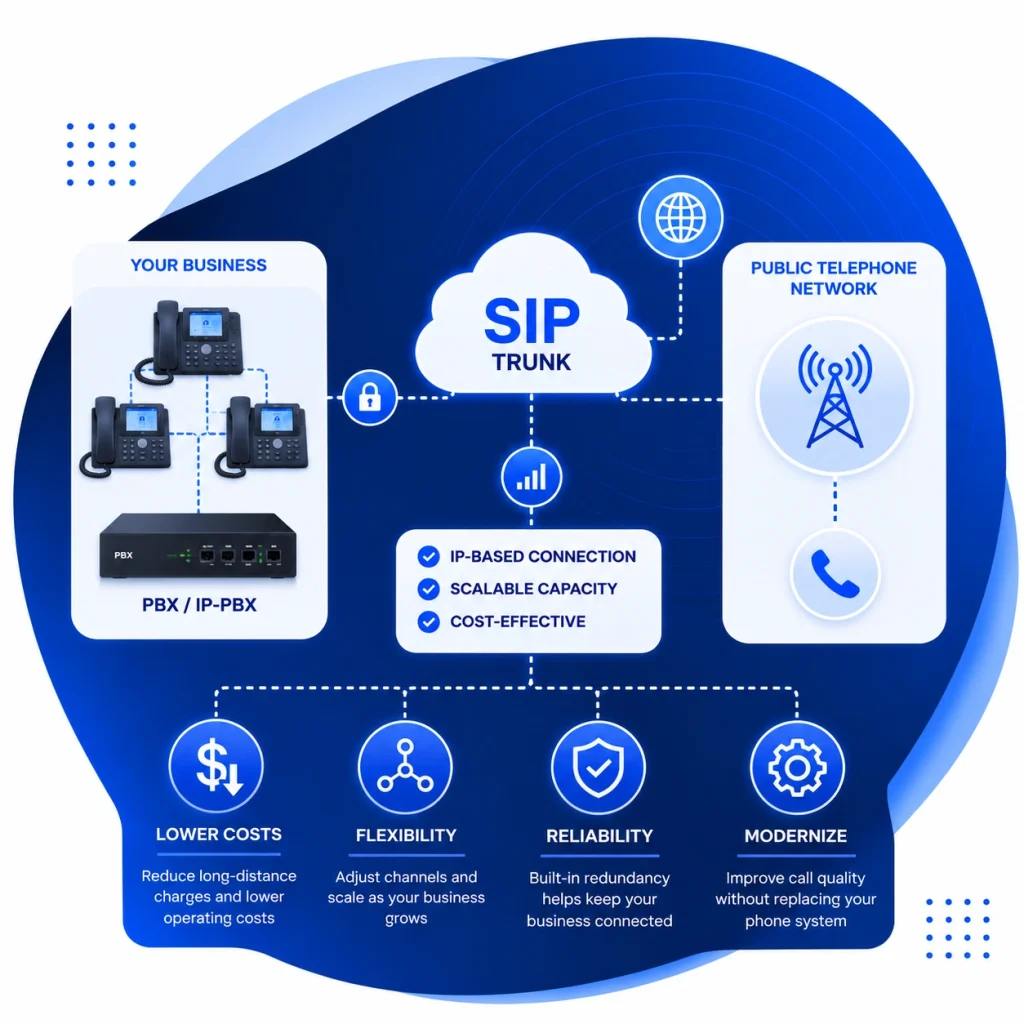
SIP trunks are a good fit for businesses that:
Have an existing IP-capable or compatible phone system
Want to move away from traditional voice circuits
Need additional calling capacity as their business grows
Operate in regulated industries
Operate multiple locations
Need a more flexible approach to business voice services
Gibson Teldata can evaluate your existing phone system, network, numbers, call volume, and business requirements to determine whether SIP trunking makes sense for your environment.
Modern SIP trunking provides businesses with a flexible foundation for voice communications. Depending on your environment, capabilities include:
Adjust voice capacity as call volume, locations, and business requirements change
Keep established business numbers when number portability and carrier requirements allow.
Connect your compatible business phone system to external telephone networks for everyday calling.
Route calls between numbers, locations, systems, or endpoints based on your communications setup.
Build additional resiliency into your voice environment with supported backup routing and connectivity options.
Move voice connectivity to an IP-based service while continuing to get value from compatible phone system investments.
Add calling capacity without depending on the installation of additional traditional telephone circuits.
Create a more consistent voice strategy across offices, branches, and other business locations.
Give your business more options as you plan future phone system, cloud, or hybrid communication upgrades.
Not always. SIP trunks can work with many compatible IP-based and on-premises phone systems. Gibson Teldata reviews your current equipment and determines what’s required.
In many cases, yes. Existing numbers can often be ported to a new service, although availability and timing depend on the current carrier and number portability requirements.
Calling capacity is configured based on the number of simultaneous calls your business needs to support. Gibson Teldata reviews your typical and peak call volume to help right-size your service.
Yes. Because SIP is IP-based, network connectivity and configuration play an important role in voice performance. Gibson Teldata evaluates both your voice and network environments as part of the solution.
Replace aging analog telephone services with modern connectivity designed to support the systems your business still depends on.
POTS, or Plain Old Telephone Service, refers to the traditional analog phone lines that have supported voice and other business systems for decades.
These lines might still be connected to equipment like elevator phones, fire and security alarm panels, fax machines, emergency phones, entry systems, and older phone equipment.
As carriers continue transitioning away from legacy copper infrastructure, POTS line replacement gives businesses another way to keep compatible analog equipment connected without relying on a traditional copper telephone line.
Depending on the application, replacement solutions can use IP or cellular connectivity along with specialized gateways designed to provide the connection existing equipment requires.
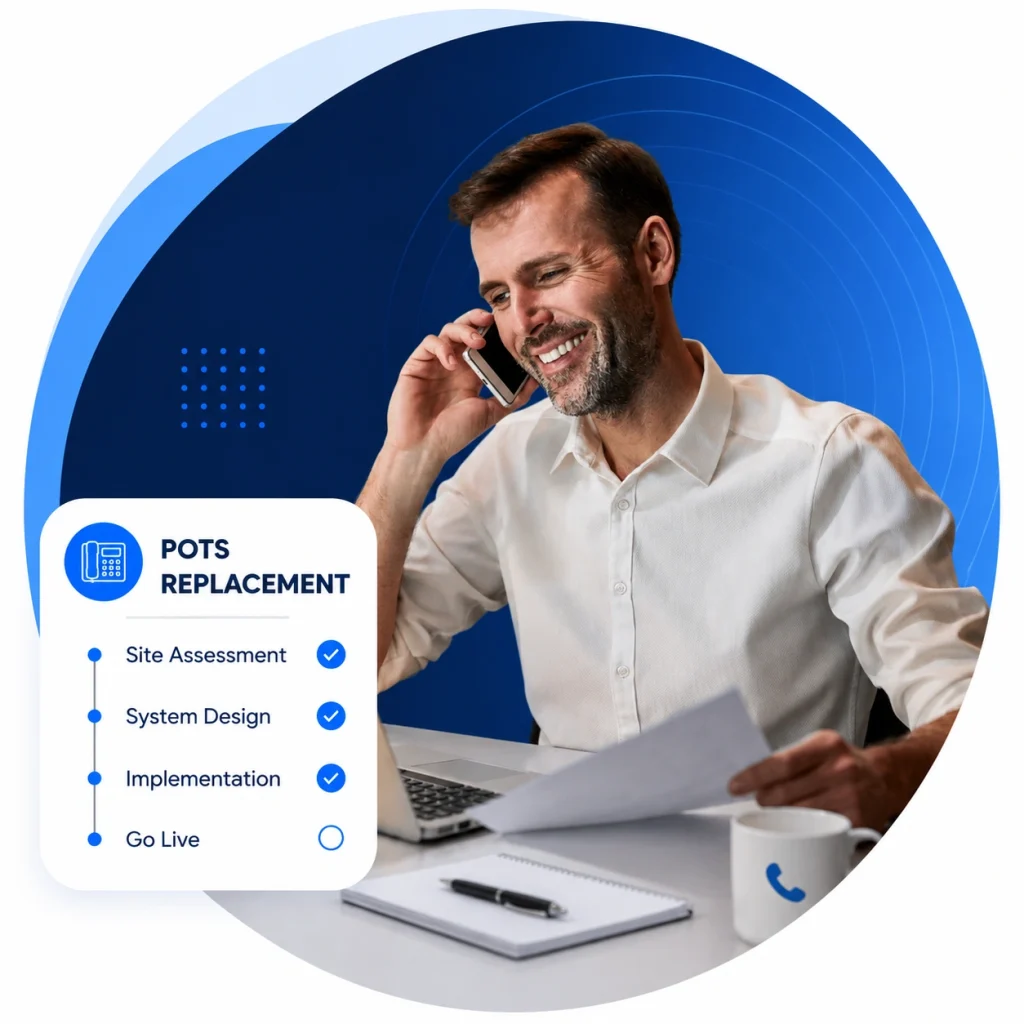
It might be time to evaluate POTS replacement if your business:
Still pays for traditional analog telephone lines
Maintains fax machines or other legacy analog devices
Uses analog lines for elevator or emergency phones
Has seen changes in the price or availability of traditional lines
Has fire, security, or monitoring systems connected to POTS
Wants to identify analog dependencies before carrier services change
The first step is knowing exactly where your analog lines are being used. Gibson Teldata helps inventory existing connections and determine the right replacement strategy for each application.
The exact solution depends on the equipment being supported, but modern POTS replacement options include:
Maintain connectivity for compatible equipment that still requires an analog-style connection.
Move communications away from traditional copper infrastructure using modern network technologies.
Supported solutions include secondary network paths to provide additional resiliency for important systems.
Help maintain supported communications during temporary power interruptions with appropriately configured backup power.
Monitor and manage supported replacement equipment without relying solely on legacy carrier infrastructure.
Continue using compatible analog devices while changing the network that connects them.
Move essential systems away from traditional copper services that no longer fits your long-term technology plans.
Identify what each analog line supports and transition those connections into a more manageable environment.
Create a coordinated migration strategy instead of replacing lines individually as carrier services change.
Common examples include elevator phones, fire and security alarms, fax machines, emergency phones, entry systems, legacy phone equipment, and other monitoring devices.
Not necessarily. Many POTS replacement solutions are designed to provide compatible analog equipment with the type of connection it expects while using newer network technology behind the scenes.
Solutions for fire alarms, elevator phones, and other life safety applications require careful evaluation. Compatibility, local codes, monitoring requirements, backup power, and other considerations should be reviewed before a replacement is selected.
An audit is usually the best place to start. Gibson Teldata helps identify your existing lines, determine what each one supports, and recommends which connections should be replaced or modernized.
Create a practical path from traditional ISDN PRI circuits to modern voice connectivity while protecting the numbers, call flows, and phone system capabilities your business relies on.
ISDN PRI has long been used to connect business phone systems to the public telephone network, allowing multiple simultaneous calls to travel over a digital circuit.
For organizations with existing PRI services, migration means moving those voice connections to a newer alternative, such as SIP trunking, cloud communications, or another modern carrier solution.
A successful migration involves more than changing the circuit. Your phone numbers, call capacity, routing, fax requirements, emergency calling, network environment, and existing phone system should all be considered before cutover.
Gibson Teldata helps businesses evaluate the full environment and build a migration plan around how they actually communicate.
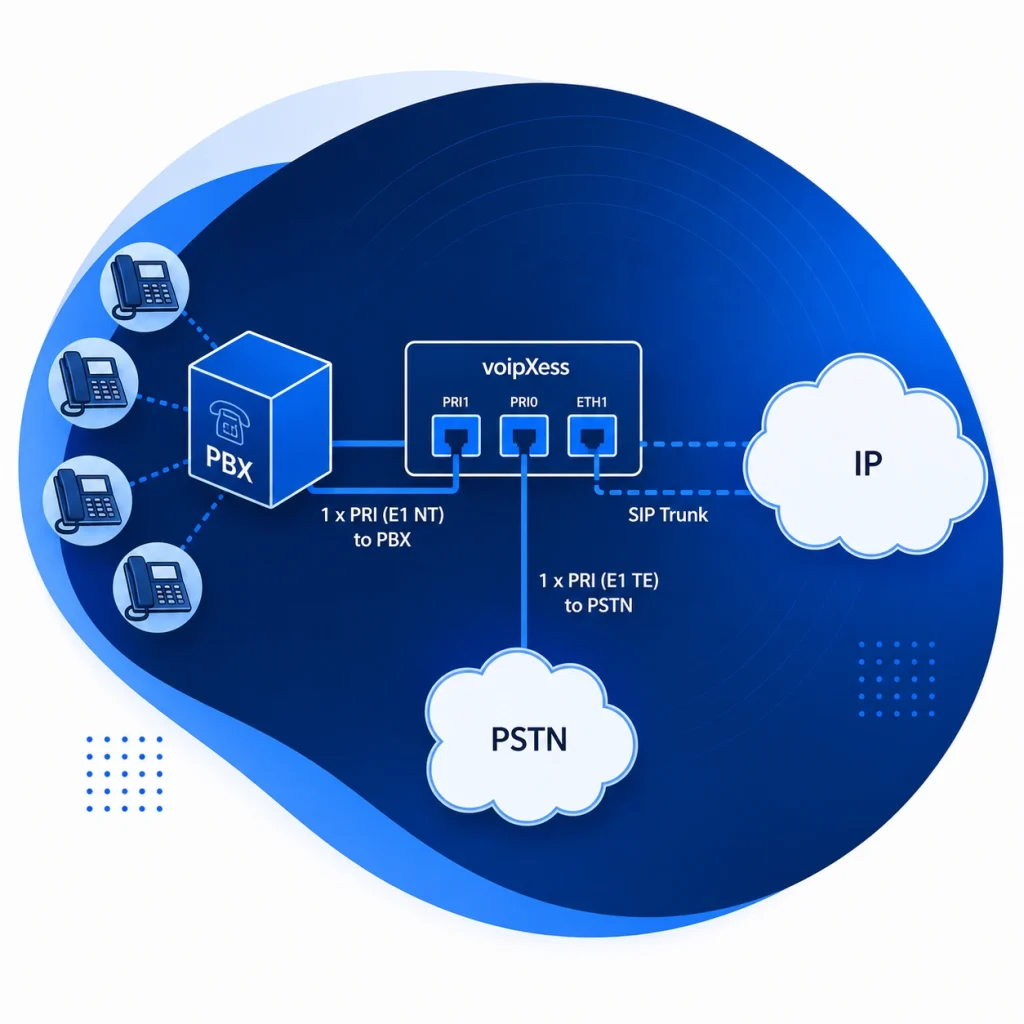
Your business benefits from evaluating a PRI migration if you:
Currently use one or more ISDN PRI circuits
Are planning a phone system modernization project
Have an existing on-premises phone system
Need to consolidate voice services across locations
Want greater flexibility in voice capacity
Want a defined strategy for moving away from legacy carrier technology
Migration doesn’t have to mean replacing everything at once. The right path depends on your phone system, locations, network, business requirements, and future plans.
A well-planned PRI migration can help preserve the communication workflows your business already depends on while introducing more flexible connectivity.
Coordinate the transfer of established business numbers while minimizing disruption to customers and employees.
Review current and peak call volume so the replacement service is configured around actual business demand.
Evaluate modern alternatives based on your current phone system and future communications strategy.
Test inbound calling, outbound calling, routing, caller ID, faxing, and other important functions before completing the migration.
Explore backup connectivity and call-routing strategies designed to strengthen business continuity.
Move beyond fixed legacy circuits and build voice capacity around changing business needs.
Create a stronger foundation for SIP, cloud voice, unified communications, and other IP-based technologies.
Bring multiple offices and voice services into a more coordinated communications strategy.
Choose connectivity that can evolve as users, locations, applications, and call volumes change.
Not always. Some existing phone systems can connect to newer voice services directly or with additional equipment. Others might be better candidates for a broader phone system upgrade.
In many cases, yes. Number portability depends on the numbers, carriers, and services involved. Number migration should be planned carefully as part of the transition.
Depending on your environment, a phased migration might be possible. Gibson Teldata evaluates your locations and existing infrastructure to determine the most practical approach.
Important considerations include your existing phone system, numbers, simultaneous call requirements, fax or analog devices, emergency calling, network connectivity, call routing, and business continuity requirements.
Give customers, prospects, and partners a simple, recognizable way to connect with your business using a toll-free number that can be routed around the way your team works.
Toll-free numbers are business telephone numbers designed to let callers connect without traditional long-distance charges being placed on the calling party.
They’re widely used for sales lines, customer service departments, support centers, multi-location organizations, marketing campaigns, and businesses that serve customers across a broad geographic area.
A toll-free number can route into your existing business phone system and can be configured around the people, locations, or departments that need to answer those calls.
Whether you’re adding your first toll-free line or managing numbers across a larger organization, Gibson Teldata helps build the service around your call-handling requirements.
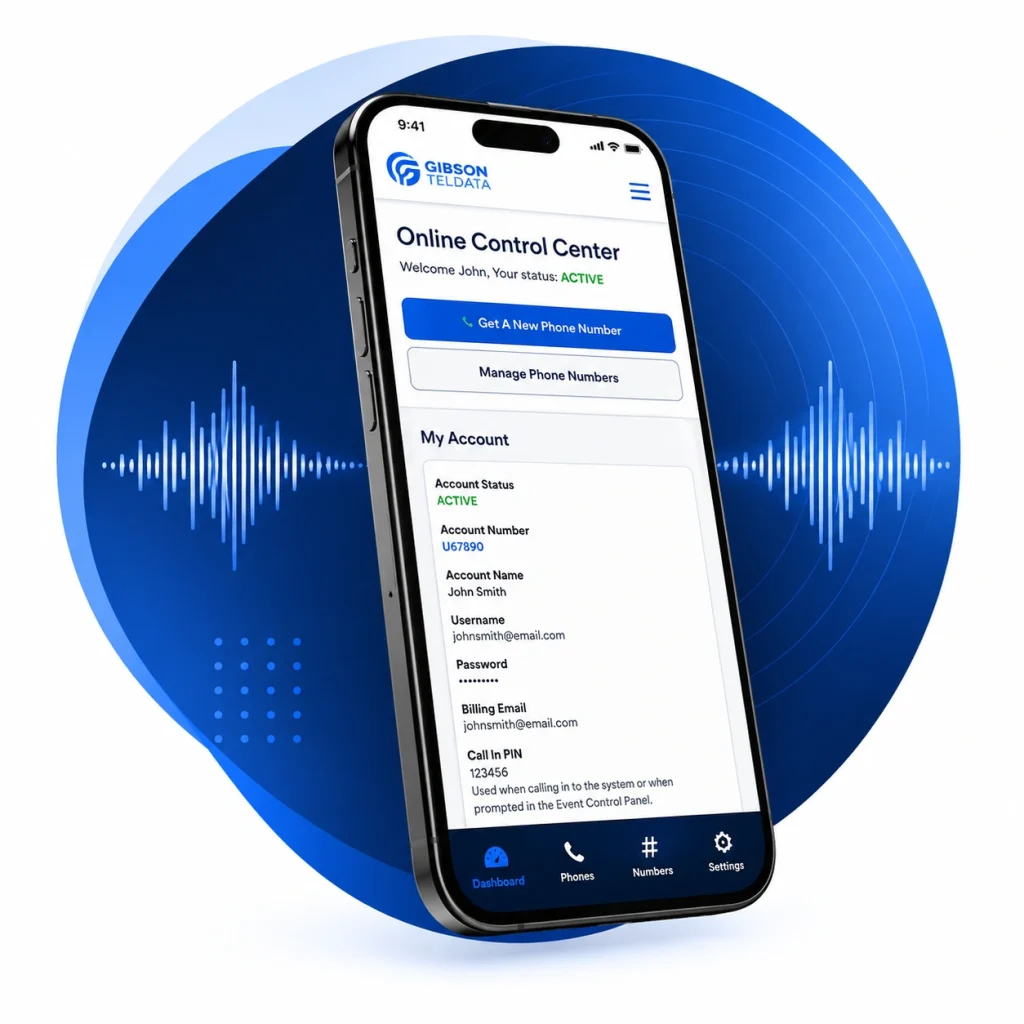
A toll-free number may make sense if your business:
Serves customers across multiple cities, states, or regions
Runs marketing or advertising campaigns
Operates a centralized customer service or support team
Needs dedicated numbers for departments or services
Wants one primary number for multiple business locations
Wants to make its business number easier to recognize and promote
The right number strategy should complement your existing local numbers, phone system, and customer communication workflows.
Modern toll-free services can provide more than a memorable business number. Depending on your configuration, features include:
Send incoming calls to the appropriate office, department, phone system, or destination.
Use toll-free numbers alongside your existing business voice environment.
Create a single point of contact while distributing calls across different offices or teams.
In many cases, established toll-free numbers can move between providers while remaining familiar to customers.
Use different toll-free numbers for customer service, sales, marketing campaigns, products, or other business functions.
Give customers a central number for reaching your organization regardless of where your employees or offices are located.
Make it easier to promote your business beyond a single local market.
Use dedicated numbers for campaigns, services, or departments to create clear paths for customer response.
Route toll-free calls around departments, locations, schedules, and other business requirements.
Toll-free service uses designated number prefixes and is structured so eligible call charges are associated with the business receiving the call rather than traditional long-distance charges being placed on the caller.
Yes, in many environments. Calls to the toll-free number can be routed into compatible business phone systems and call-handling platforms.
Toll-free numbers are generally portable between service providers, subject to the applicable transfer process and service requirements.
Yes. Businesses can use multiple numbers for different departments, locations, campaigns, products, or other purposes depending on availability and their communications strategy.
For over 40 years, Gibson has helped businesses design, implement, and support technology solutions that keep them connected.

Responsive service from a local team that knows your business and your community.
Technology recommendations based on your business, not a one-size-fits-all solution.
Communications, IT, networking, security, and life safety, all from one trusted partner.
From planning and installation to ongoing support, we're here every step of the way.
Bring calling, messaging, video, collaboration, mobility, and more together with a flexible cloud communications platform designed to grow with your business.

Modernize your business communications without forcing every organization into the same model. Gibson Teldata designs on-premises and hybrid environments around your infrastructure and operational needs.

Reliable voice starts with reliable connectivity. Build the network foundation your cloud communications, SIP services, applications, and everyday business operations depend on.