
Table of Contents
Modern organizations rely on strong security to protect people, assets, and daily business operations. For healthcare facilities, commercial buildings, municipal campuses, and even a retail store operating across multiple locations, the pressure to maintain safety while supporting operational efficiency continues to grow.
Today’s security needs demand more than standalone devices and more tech. They require integrated security systems designed for true security system integration.
Integrated security systems connect access control, video surveillance, intrusion detection and alarms, and commercial paging systemsinto a unified system that strengthens physical security while improving efficiency.
Instead of managing multiple systems that operate independently, businesses gain one coordinated security solution built to support long-term scalability and secure growth.
What Are Integrated Security Systems?
An integrated security system is a structured security solution that connects access control systems, security cameras, monitoring platforms, and communication tools into a single security system architecture.
Through intentional integration, organizations eliminate technology silos and create a secure environment where systems share data and automate response.
Security system integration ensures that your access control system communicates with video surveillance platforms, your network video recorder supports real time monitoring, and your commercial paging integrates with intrusion detection.
Rather than reacting after security incidents occur, integrating security enables proactive monitoring, automation, and faster response.
This unified system approach strengthens safety while improving operational efficiency across the entire organization.
The Hidden Costs of Disconnected Security Systems
Most businesses add security systems gradually. A commercial access control system is installed to manage entry points. Later, security cameras are added. Intrusion alarms are deployed in specific areas. Over time, these multiple systems create complexity, hidden costs, and increased risk.
Without proper security system integration:
- Access control does not automatically trigger video surveillance review
- Monitoring teams must switch between platforms
- Access permissions may not sync across locations
- Employees rely on manual processes during critical events
- Business operations slow due to inefficient system coordination
Disconnected security systems can compromise safety and reduce efficiency. When security solutions are not designed for integration, organizations struggle to maintain visibility and control.
Integrated security systems eliminate these gaps by connecting other security systems into one coordinated security solution.
Access Control as the Foundation of Modern Security Systems
Access control is central to any modern security system. Strong access control systems determine who can enter, when they can enter, and what specific areas they can access.
A properly designed access control system manages entry points using key card credentials, smart locks, and digital credentials. It allows administrators to assign access permissions, grant temporary access, and manage employees across multiple sites and multiple locations.
When access control is integrated into broader integrated security systems, the benefits expand significantly:
- A denied access attempt can trigger security cameras for review
- Accessing restricted areas can activate IP video surveillance systems
- Access control data can be shared with monitoring teams in real time
- Automation can adjust access during emergencies
Commercial access control systems built for integration allow organizations to manage control, monitor entry, and protect assets with greater precision.
For healthcare facilities and commercial buildings, access control systems play a crucial role in maintaining safety while supporting daily operations.
Video Surveillance and Real Time Monitoring
IP video surveillance systems are a critical component of integrated security systems. Modern security cameras connected to a network video recorder provide real time monitoring and recorded documentation of security incidents.
When video surveillance platforms operate independently, teams must manually match footage to access control logs. Through security system integration, access control events automatically link to security cameras, enabling faster investigation and improved monitoring.
Integrated security systems allow:
- Remote monitoring across multiple locations
- Automated video capture triggered by access control events
- Centralized monitoring platforms connected through secure internet connectivity
- Improved operational efficiency through unified dashboards
By connecting video surveillance with access control systems, businesses strengthen physical security while enhancing operational efficiency.
Intrusion Detection, Intrusion Alarms, and Automation
Intrusion detection and intrusion alarms add another layer of protection within integrated security systems. When integrating security components properly, intrusion alerts can activate monitoring workflows, notify employees, and restrict access control system permissions automatically.
Automation is crucial in reducing risk. For example:
- An intrusion detection event can trigger security cameras and remote monitoring
- Access control can automatically lock specific areas
- Paging systems can issue safety announcements
This level of integration supports safety while reducing manual intervention. Automation helps organizations maintain control and eliminate delays during critical situations.
Supporting Healthcare Facilities and Commercial Buildings
Healthcare facilities require integrated security systems to protect patients, employees, and sensitive assets. Access control systems must manage specific areas such as labs, records rooms, and pharmaceutical storage. Video surveillance supports monitoring, while intrusion detection protects after hours.
Commercial buildings and a retail store environment also rely on integrated security systems to maintain safety, manage entry, and protect assets across multiple sites.
For clients operating across multiple locations, cloud-based security platforms allow centralized monitoring and management. This connectivity enables organizations to maintain consistent access control policies and security solutions across the business.
Improving Operational Efficiency and Business Operations
Integrated security systems do more than improve safety. They enhance operational efficiency and support smoother business operations.
When access control, video surveillance, monitoring, and automation operate within one unified system, teams spend less time managing platforms and more time focusing on business priorities. Integration reduces duplication, simplifies system management, and improves efficiency across departments.
Security system integration also helps businesses manage growth. Scalable systems support expansion to multiple locations without rebuilding the entire security solution.
What to Look for in a Security System Integration Provider
Choosing the right provider is crucial when implementing integrated security systems. True security system integration requires expertise across access control systems, video surveillance, intrusion detection, networking, and monitoring platforms.
| A qualified provider should offer: | |
| Proven expertise in integrating multiple systemsSecure system architecture designed to protect assetsCloud-based and on-premise solutions | Ongoing services and supportExperience serving healthcare facilities and commercial buildings |
Security solutions should be tailored to your organization’s security needs. The right partner will evaluate entry points, access control requirements, monitoring strategies, and automation goals before designing a cohesive security system.
The Long-Term Benefits of Integrated Security Systems
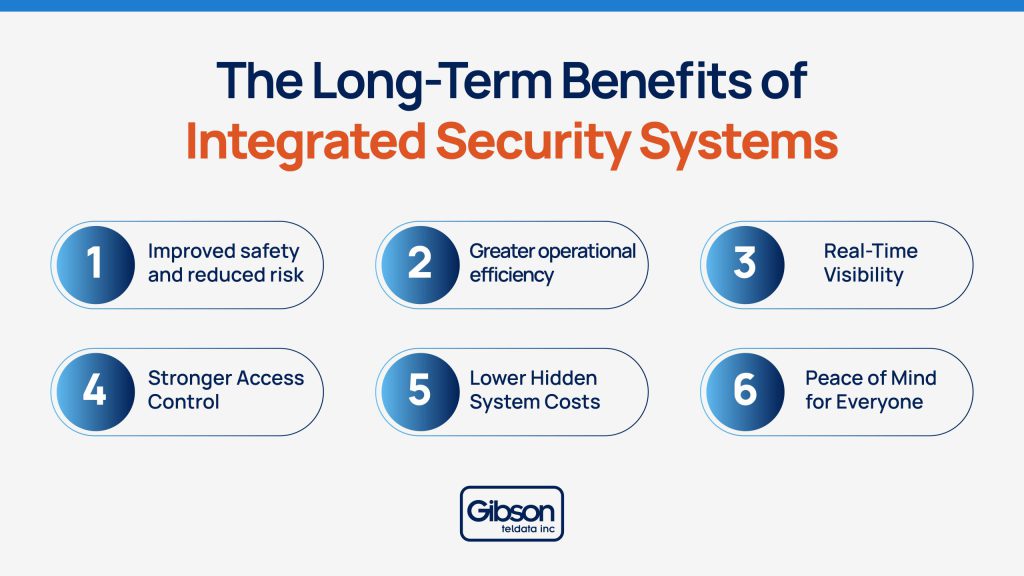
Integrated security systems deliver measurable benefits:
- Improved safety and reduced risk
- Greater operational efficiency
- Enhanced monitoring and real time visibility
- Stronger control over access permissions
- Reduced hidden costs associated with multiple systems
- Peace of mind for leadership and employees
By integrating security across access control, video surveillance, intrusion alarms, and monitoring platforms, businesses gain a security solution designed for reliability and scalability.
A Secure Future Built on Integration

Security is no longer about installing isolated devices. It’s about building integrated security systems that connect platforms, automate response, and maintain safety across your entire organization.
Through strategic security system integrationwith a partner like Gibson Teldata, businesses can protect assets, support employees, manage access effectively, and maintain operational efficiency across multiple sites.
Integrated security systems create the foundation for safer facilities, smarter operations, and long-term peace of mind. Learn more by contacting us today!