
Gibson helps businesses protect critical information and prepare to restore access to essential systems and data when disruptions occur.
Create reliable backup processes for the files, applications, systems, and information your organization depends on every day.
Plan how important data and systems will be restored before recovery is actually needed.
Build backup and recovery into a broader continuity strategy designed to help your business keep moving through unexpected interruptions.
Having a copy of your data is important. Knowing what’s being backed up, where those backups are stored, how quickly information can be recovered, and what should be restored first is what turns backup into a recovery strategy.
Gibson helps businesses look beyond storage alone and create a more complete approach to protecting critical information and maintaining access to the technology their teams rely on.
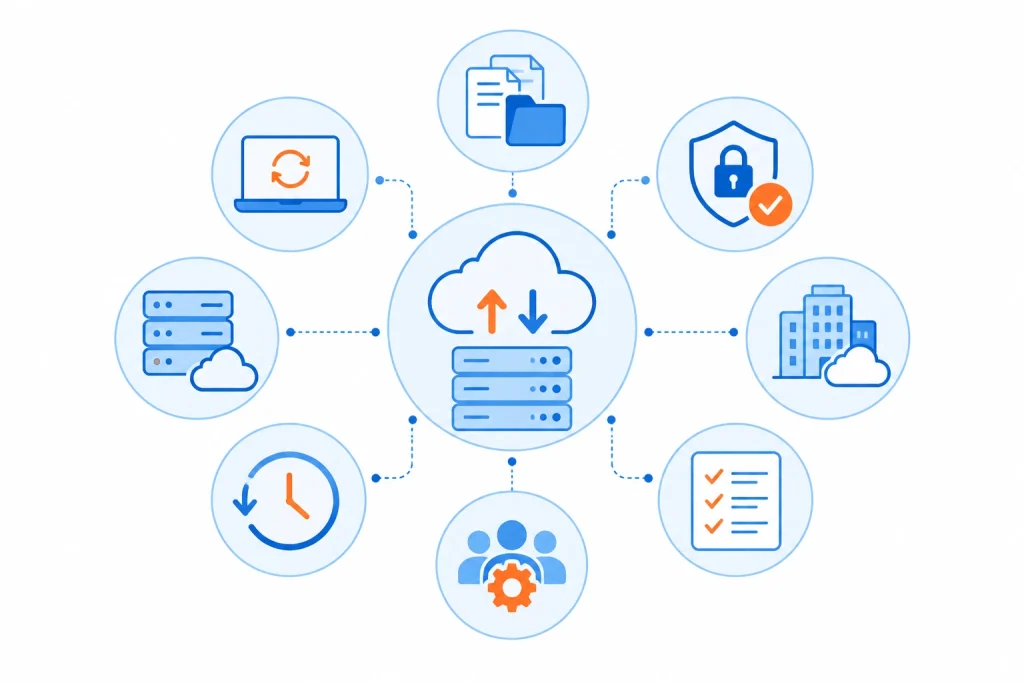
Supporting recovery starts with understanding what needs protection, then building a practical backup and recovery approach around your organization’s priorities.
Gibson helps identify the business information, applications, systems, and technology resources that should be included in your backup and recovery strategy.
Determine how data will be backed up, where copies should be stored, how often backups should occur, and how recovery should be prioritized.
Recovery planning shouldn’t end once backups are configured. Testing and ongoing support help confirm that the process remains aligned with your technology environment and business needs.
Backup and recovery planning helps your organization move from just storing copies of information to having a clearer plan for restoring access when needed.
Protect important files, systems, applications, and other business data with a backup strategy designed around how your organization actually uses technology.
Decide what needs to be restored first, how recovery should happen, and who needs to be involved before your business is working through an interruption.
Backup is one piece of continuity planning. Gibson can help align recovery with your network, infrastructure, communications, cloud environment, and broader technology strategy.
The right approach depends on the data, systems, applications, and recovery requirements that matter most to your business. Gibson helps build a strategy around those needs.
Protect important business files, application data, system information, and other critical resources through backup processes designed around your environment.
Use cloud-based backup options to maintain protected copies of supported business data outside your primary technology environment.
Restore backed-up files, information, or systems when data needs to be recovered, based on your established recovery priorities and available backups.
Define how important systems and data should be restored, including recovery priorities, technology dependencies, and the steps needed to bring resources back online.
Connect backup and recovery planning with the broader technology your employees need to continue working, including networks, cloud services, infrastructure, and Business Communications.
Test recovery processes and review backup strategies over time to make sure they continue to reflect changes in your systems, data, and business requirements.
Gibson looks beyond whether a copy of your data exists. We help businesses think through recovery priorities, technology dependencies, and what restoring access actually requires.
Your applications, servers, cloud services, network, and data all affect recovery. Gibson builds backup and recovery strategies around the technology your business is already using.
Technology changes over time. Gibson can help support, review, and adjust your recovery strategy as systems, applications, users, and business requirements evolve.
Recovery rarely involves one isolated system. Gibson also supports Managed IT Services, IT Infrastructure, Cybersecurity, connectivity, and Business Communications, helping you address more of the technology involved in keeping your organization operational.
Data backup focuses on creating protected copies of information. Disaster recovery focuses on how that information, along with important systems and applications, will be restored after an interruption.
A complete strategy considers both.
Having backups doesn’t automatically establish which information should be restored first, how long recovery may take, what systems depend on one another, or who’s responsible for each step.
Recovery planning helps answer those questions before the process is needed.
Cloud backup stores protected copies of supported data in a cloud-based environment rather than relying solely on storage located within your primary business facility.
Whether cloud backup is appropriate depends on your data, applications, infrastructure, recovery needs, and overall technology strategy.
Business continuity looks at how your organization can continue operating through an interruption. Backup and disaster recovery support that goal by helping restore access to the data and systems employees need to work.
Continuity planning may also involve areas such as network connectivity, IT Infrastructure, cloud services, and Business Communications.
Yes. Testing can help confirm that backup data is available and that established recovery processes still make sense for the organization’s current technology environment.
Testing is especially valuable as applications, infrastructure, data, and business priorities change.
Yes. Gibson connects backup and recovery planning with its broader Managed IT Services, IT Infrastructure, Cybersecurity, cloud, connectivity, and communications capabilities.
Protect your critical information and create a practical plan for restoring the systems and data your business depends on. Gibson helps you build backup and recovery into a broader technology strategy designed around your organization.