
A secure facility takes more than a camera at the front door. Businesses need the right tools to detect activity, control entry, monitor important areas, and communicate with visitors before granting access.
Gibson Teldata brings those pieces together with physical security solutions designed around your facilities, people, and day-to-day operations.
Your building shouldn’t become a blind spot when employees leave for the day.
Gibson Teldata provides intrusion detection and monitoring solutions that help businesses identify unauthorized entry and receive alerts when activity requires attention. Systems can be designed around individual facilities, multiple locations, and the specific areas your organization needs to protect.
From control panels and sensors to monitoring and signaling devices, Gibson helps put the right pieces in place.
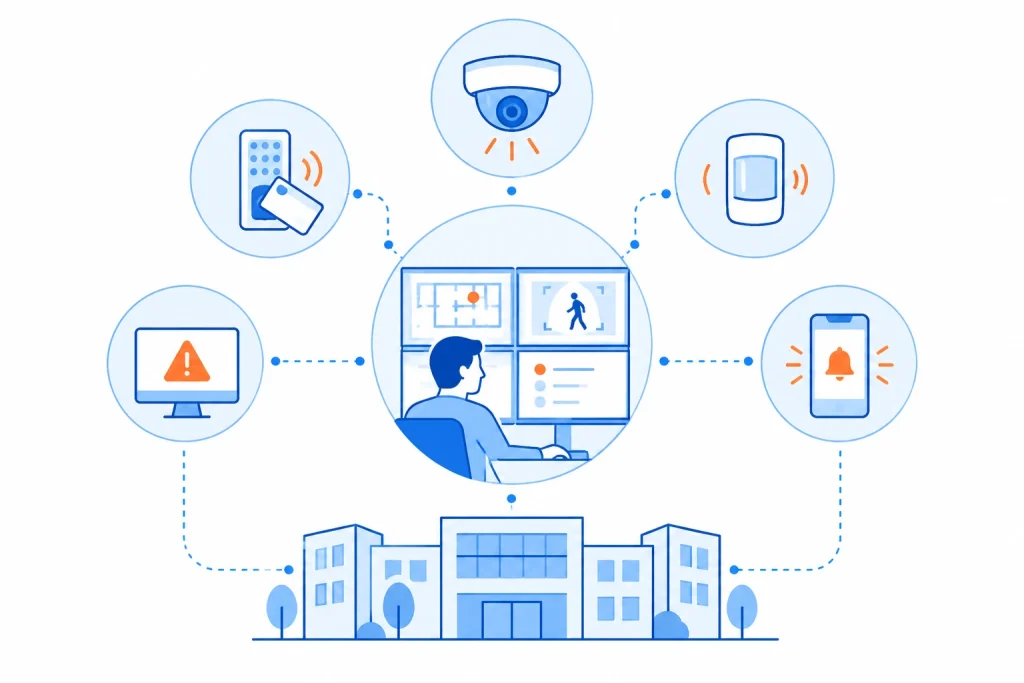
An intrusion detection system can be a good fit if:
Your facility is unattended overnight or during certain hours
You need alerts when unauthorized entry is detected
You store valuable equipment, inventory, records, or other assets onsite
Your organization operates multiple buildings or locations
Your existing alarm equipment is aging or difficult to manage
You want intrusion detection to work alongside other physical security technology
Gibson can review your building, existing equipment, entry points, and security requirements to help design the right approach.
Explore the capabilities that can help you detect unauthorized activity and maintain greater awareness of your facility.
Receive notifications when configured security events occur, helping your organization respond according to its established procedures.
Manage and interact with your intrusion detection system through centralized controls designed for everyday use.
Monitor selected entry points for activity that might indicate unauthorized access.
Extend detection to areas where traditional wired equipment might not be the best fit.
Use audible or visual signaling devices to indicate alarm events and draw attention when needed.
Configure security around different areas, departments, tenants, or facilities based on your organization’s requirements.
Monitoring helps businesses stay informed even when no one is physically onsite.
Give sensitive rooms, entrances, storage areas, and other priority locations additional layers of protection.
Monitor call quality across departments to maintain service standards and uncover trends that can improve operations.
Businesses with several facilities can create a more consistent approach to intrusion detection across their organization.
An intrusion detection system uses sensors, control equipment, and signaling devices to identify activity such as unauthorized entry into a protected building or area.
Yes. Gibson offers intrusion solutions with 24/7 monitoring and alerts to help organizations remain aware of security events outside normal business hours.
Yes. Systems can be configured around particular doors, windows, rooms, departments, or other areas based on your facility and security requirements.
Gibson can assess your existing equipment and determine whether components can continue to be used or whether updated technology would better support your needs.
Depending on the technologies selected, intrusion detection can be incorporated into a broader security environment that can also include access control and video surveillance.
Traditional keys can open a door, but they can’t tell you who entered, limit access by schedule, or be deactivated with a few clicks when circumstances change.
Door access control gives businesses more control over who can enter a building or restricted area and when.
Gibson Teldata designs access control solutions around your facility, employees, departments, and security requirements, helping you move beyond one-key-fits-all building access.
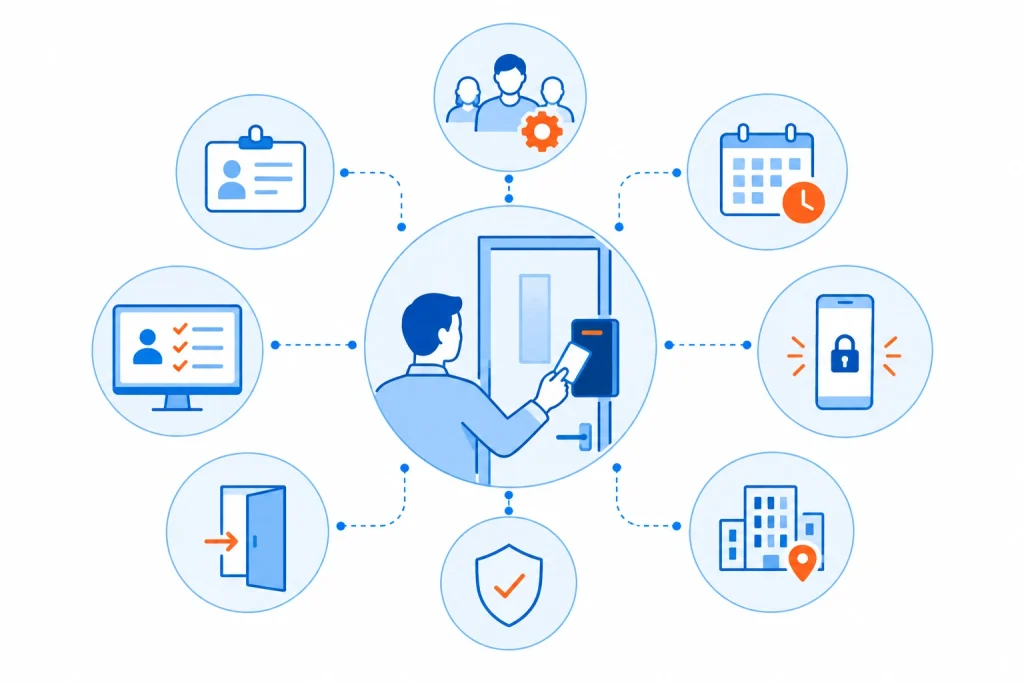
Access control might make sense if:
Managing physical keys has become difficult
You need greater visibility into who’s entering specific areas
Employees need different levels of building access
Your business frequently adds or removes employees, contractors, or vendors
Certain rooms or areas should be restricted to authorized personnel
You want the ability to change permissions without replacing locks or collecting keys
Gibson can help determine where electronic access control provides the most value and how it can fit into your existing security environment.
Explore the tools that help businesses control, manage, and better understand access throughout their facilities.
Use supported cards, fobs, mobile credentials, or other authentication methods to give authorized users access.
Determine who can enter specific buildings, doors, or restricted areas based on roles and requirements.
Configure access based on time of day, days of the week, or other established schedules.
Manage users, credentials, doors, and permissions through a centralized access control environment.
Review access activity to gain greater visibility into when and where credentials are being used.
Supported systems can allow authorized administrators to manage access and review activity without being physically at the door.
Depending on your system design, access control can integrate with video surveillance and other security technologies for a more coordinated approach.
Lost key? Former employee? New contractor? Electronic permissions can be easier to change than replacing locks and distributing new physical keys.
Limit access to server rooms, inventory areas, offices, records, equipment, and other spaces that shouldn’t be open to everyone.
Give employees access to the areas they need without automatically granting access to the entire facility.
Access records can provide useful information about when credentials are used and which controlled doors are accessed.
A door access control system electronically manages who’s authorized to enter a building or specific area. Systems can use credentials like cards, fobs, mobile devices, or other supported authentication methods instead of traditional keys alone.
Yes. Access permissions can typically be configured by user, role, location, schedule, or other established rules.
Their electronic credential can be deactivated within the access control system, eliminating the need to recover a physical key before preventing future use of that credential.
Yes. The appropriate setup depends on the selected system and your organization’s infrastructure, but access control can support businesses with multiple entrances, buildings, and locations.
Many access control environments can integrate with compatible video surveillance technology. For example, video can provide additional context around an access event.
Gibson can review your existing doors, hardware, infrastructure, and security technology to determine what can be incorporated into a new access control solution.
A camera is only useful if it captures the right area, provides usable footage, and gives the right people a practical way to find what they need.
Gibson Teldata designs, installs, programs, and maintains video surveillance systems around each customer’s environment and goals.
From IP cameras and recording to video management software and supporting infrastructure, we help businesses build an end-to-end surveillance solution rather than just adding cameras wherever there happens to be room.
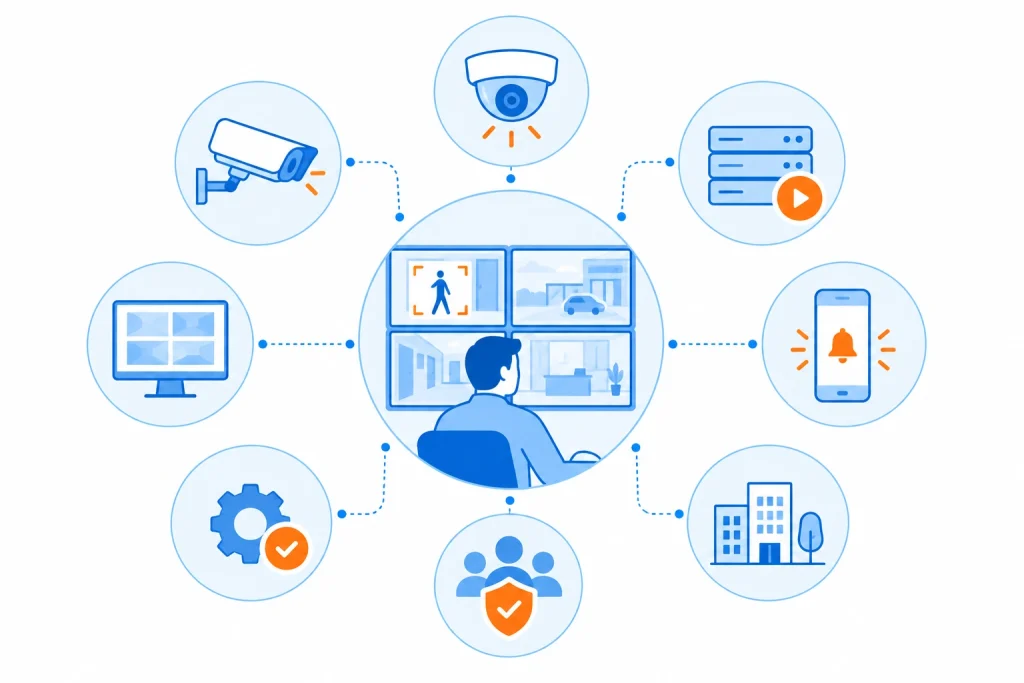
A new or upgraded video surveillance system can make sense if:
Existing cameras leave important areas uncovered
Your business needs indoor and outdoor surveillance
Recorded footage is difficult to locate or review
You are opening, expanding, or renovating a facility
Image quality from older cameras no longer meets your needs
Your organization wants cameras to work alongside access control
Gibson can help determine camera placement, recording requirements, network considerations, and the right management tools for your environment.
Explore the technologies that help organizations capture, manage, and use video more effectively.
Choose cameras suited to different locations, viewing requirements, lighting conditions, and facility environments.
Monitor important spaces throughout your property with equipment designed for the conditions where it will operate.
Capture useful video in areas where lighting is limited or changes throughout the day.
Support wider viewing areas or more flexible monitoring where traditional fixed cameras might not provide enough coverage.
Give authorized users a centralized way to view live feeds, search recorded video, and manage supported surveillance functions.
Depending on project requirements, Gibson can help evaluate technology for applications like license plate viewing and other specialized surveillance needs.
Give authorized users a centralized way to view live feeds, search recorded video, and manage supported surveillance functions.
Monitor entrances, parking areas, warehouses, offices, production spaces, and other important locations.
Recorded video can provide useful context when investigating incidents, access events, property damage, or other activity.
A centralized surveillance environment can make it easier to view several cameras, buildings, or locations.
Video can complement intrusion and access control systems by helping authorized teams understand what was happening around a particular event.
An IP camera is a digital video camera that sends video over a data network. It can be incorporated into a network-based surveillance system with recording and video management technology.
No. Gibson currently supports a range of video surveillance technologies, including IP and analog camera environments. The appropriate solution depends on your existing infrastructure and project requirements.
Yes. Gibson can review existing cameras, cabling, recorders, network infrastructure, and software to help determine the right migration or upgrade approach.
Retention depends on factors like the number of cameras, video resolution, recording settings, storage capacity, and your organization’s requirements. Gibson can help size recording and storage accordingly.
Many modern video management environments can provide centralized access to cameras across multiple areas or locations. The specific capabilities depend on the selected platform.
Camera selection depends on what you need to see, where the camera will be located, lighting, viewing distance, environmental conditions, and the purpose of the footage. Gibson starts with those objectives before recommending equipment.
Not every visitor should have immediate access to your facility, but someone still needs a simple way to communicate with them.
Intercom solutions create a direct connection between entrances and the employees responsible for responding. Depending on the environment, systems can support audio, video, visitor communication, and integration with compatible door access technology.
Gibson Teldata can help design an intercom solution around your entrances, staff workflows, security requirements, and existing communications infrastructu
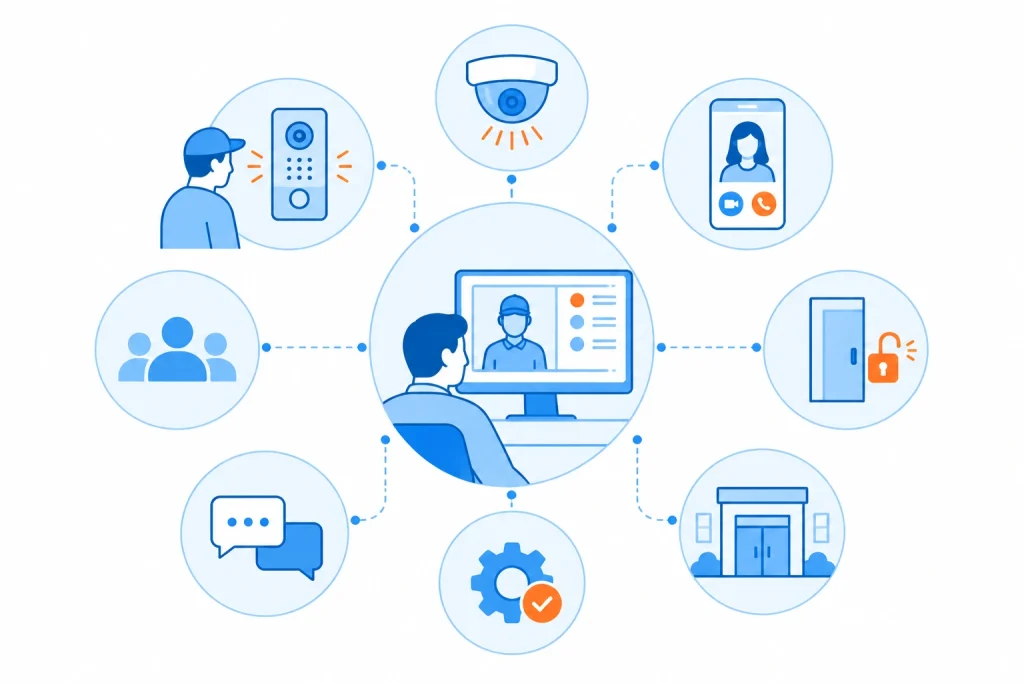
An intercom system can be useful if:
Visitors regularly arrive at locked or controlled entrances
Employees need to verify visitors before granting entry
Reception or security staff can’t maintain a physical presence at every entrance.
You want to add communication to an existing access control process
Your current intercom system has poor audio, outdated hardware, or limited functionality
Different buildings or entrances require a more consistent visitor communication process
Gibson can evaluate how people currently enter your facility and recommend a system that makes communication and access easier to manage.
Cloud-based business fax solutions offer more flexibility than traditional fax machines. Depending on your organization’s needs, features may include:
Allow visitors and employees to speak directly before access is granted.
Add visual identification at selected entrances through compatible video intercom equipment.
Create dedicated communication points at building entrances, gates, loading areas, and other controlled access points.
Give reception, security, or other authorized employees a straightforward way to answer visitor requests.
Depending on the selected system, authorized employees might be able to respond without being physically located at a reception desk.
Compatible intercom and access control systems can work together so authorized staff can communicate with a visitor and then provide access when appropriate.
Build a communication process around facilities with several entrances, buildings, gates, or controlled areas.
Talk to visitors, and where video is supported, see who’s requesting access before opening a controlled entrance.
A locked entrance can remain controlled while still giving legitimate visitors a clear way to reach someone inside.
Intercoms can connect entrances with employees elsewhere in the building instead of requiring a person at every door.
Give delivery drivers, vendors, contractors, customers, and other visitors a straightforward way to reach the appropriate person.
A business intercom system provides two-way communication between different areas of a facility, commonly between a secured entrance and employees inside the building.
Yes. Video intercom systems can provide both audio communication and a visual view of the person requesting access.
Depending on the technologies selected, an intercom can be integrated with compatible access control equipment to support visitor verification and controlled entry.
Common applications include front entrances, employee entrances, gates, loading docks, parking areas, secured departments, and other controlled access points.
Many systems can support multiple entry points. The exact configuration depends on the selected solution, facility layout, and communication workflow.
Yes. Gibson can evaluate your current intercom equipment, cabling, network, access control technology, and communication requirements before recommending an upgrade or replacement.
A camera can show you what happened. Access control helps manage who gets in. Intrusion detection alerts you when something is wrong. An intercom helps you decide who should come through the door.
Gibson looks at how those pieces fit together.

Every building has different entrances, high-priority areas, traffic patterns, and security concerns. Gibson starts with your environment before recommending technology.
Gibson works with established security technology providers, including Bosch and Digital Watchdog, to help match equipment and platforms to each organization’s needs.
Our team helps take security projects from planning through implementation, including system design, equipment installation, programming, and configuration.
When systems need maintenance, changes, troubleshooting, or expansion, Gibson provides ongoing support from a team that already understands your technology environment.
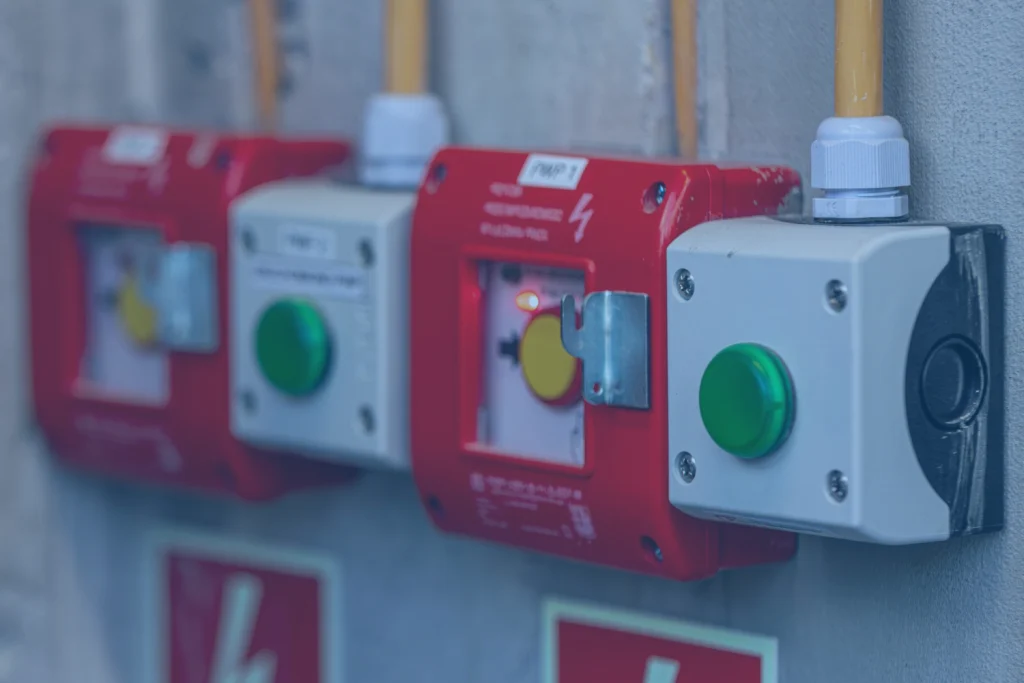
Connect your broader facility strategy with fire alarm systems, monitoring, nurse call technology, and other life safety solutions designed to support people when response matters most.

Deliver announcements and urgent information across facilities with paging and mass notification technology that supports faster, clearer communication.
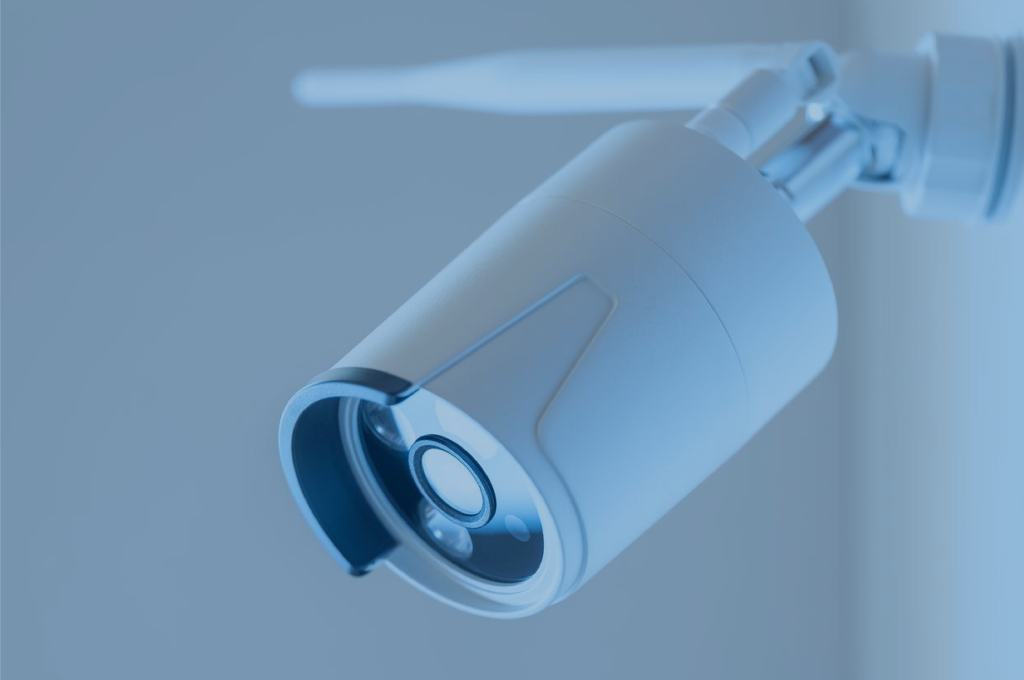
Support IP cameras, access control, intercoms, and other connected systems with the switching, routing, firewalls, and network infrastructure they rely on.