Table of Contents
For decades, POTS lines, also known as plain old telephone service lines, have supported essential business operations. These analog phone lines run over traditional copper wire networks, forming part of the public switched telephone network (PSTN) that many businesses still rely on today.
But that foundation is disappearing.
Across the country, carriers are retiring copper infrastructure and shutting down telephone service lines tied to aging systems. This ongoing POTS line replacement is forcing many businesses to rethink how they support critical systems like fire alarms, elevator emergency phones, security systems, and fax machines.
If your organization still depends on these aging phone lines, now is the time to evaluate your POTS line phase out strategy before disruptions occur.
What POTS Stands for and How It Works
A POTS phone line is often referred to as a plain old telephone service POTS. It relies on copper wire to transmit voice signals as an electrical signal, enabling businesses to receive phone calls and support voice calls through traditional infrastructure.
These traditional analog phone lines have been widely used for:
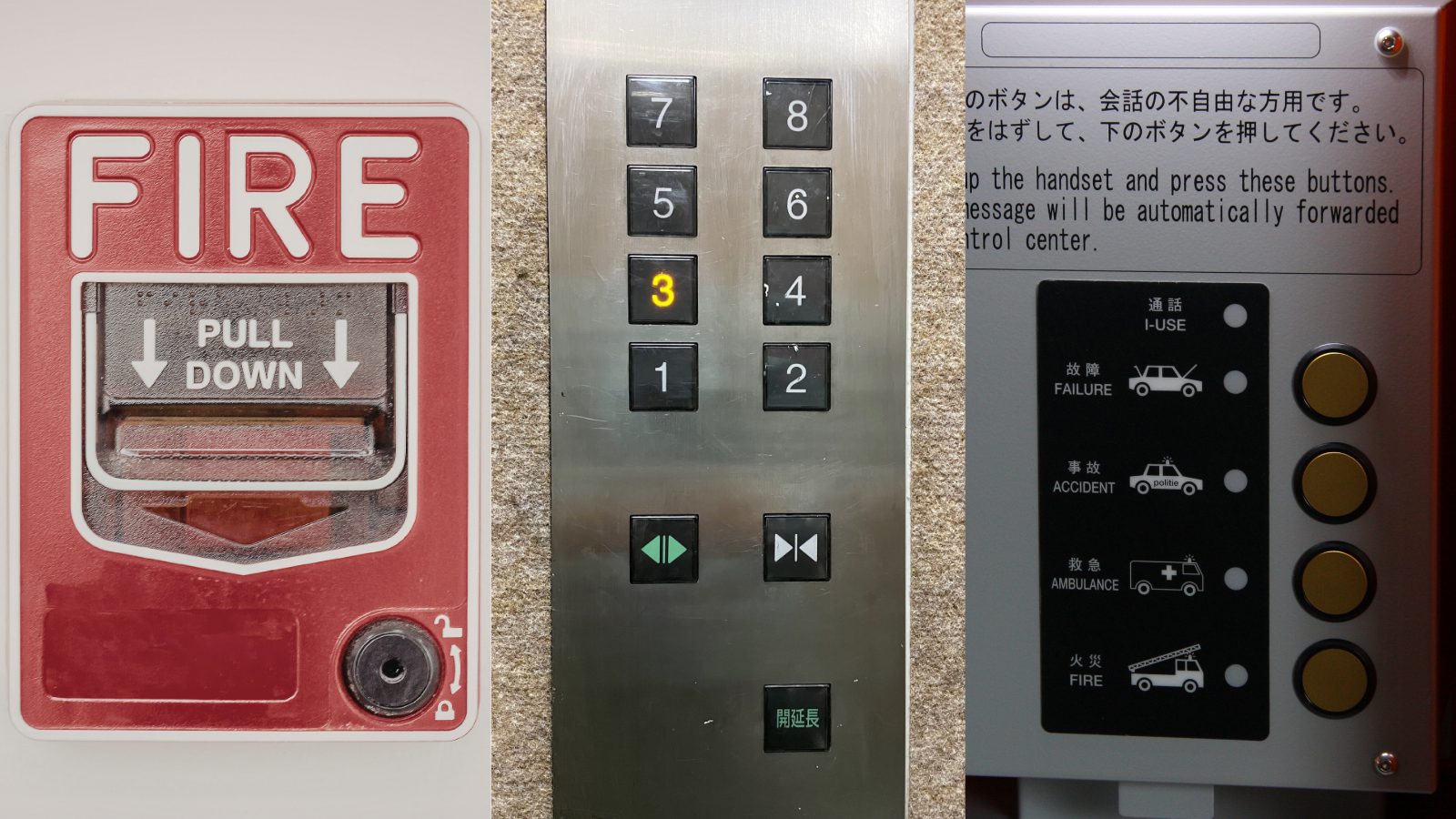
- Fire alarm panels and security alarms
- Elevator emergency phones
- Fax machines and credit card processors
- Other alarm systems and monitoring tools
- Legacy phone systems and private branch exchange (PBX) setups
While reliable in the past, even during power outages, this legacy telephone network is no longer sustainable for carriers to maintain.
Why the POTS Line Phase Out Is Happening
The shift away from analog POTS lines is driven by both cost and infrastructure limitations.
Maintaining aging POTS lines is expensive. Carriers are prioritizing digital networks and internet protocol (IP) technologies as business phone line alternatives.
As a result, copper infrastructure tied to traditional landline phones is being retired. This copper line shutdown impacts any business still relying on analog lines or POTS service.
For many businesses, the challenge isn’t awareness, it’s understanding how quickly these changes are happening and what it means for their essential services.
The Risks of Delaying POTS Line Replacement
Waiting to replace POTS linescan create serious operational and compliance risks.
Service Disruptions
As POTS infrastructure continues to decline, failures in telephone service are becoming more common. When a phone line tied to a critical system fails, it may not be repairable.
Compliance and Safety Concerns
Systems like fire alarms, emergency phones, and call boxes depend on reliable connectivity. A failed phone line can disrupt emergency response and put your organization at risk.
Rising Costs
The cost of maintaining analog phone connections continues to increase. Businesses are paying more for declining service, making analog line replacement not just necessary, but financially practical.
Limited Support for Legacy Devices
Many existing analog devices are becoming harder to support as vendors phase out compatibility with older analog signals.
Common Systems Still Using POTS Lines
Many businesses don’t realize how many systems still rely on POTS lines.
These often include:
- Fire alarm panels and other alarm systems
- Elevator phones and emergency lines
- Security systems and monitoring tools
- Fax machines and credit card processors
- Backup voice lines for redundancy
Identifying these dependencies is the first step in planning a successful line replacement.
POTS Line Replacement Options for Modern Businesses
There are several POTS line replacement options available today, each designed to support different environments and requirements.
IP-Based POTS Replacement Solutions
Modern POTS replacement solutions convert analog signals into digital data using Voice over Internet Protocol (VoIP). These systems use internet connectivity to support phone services and critical infrastructure.
This type of POTS replacement allows businesses to keep their analog phone equipment while transitioning away from copper lines.
POTS Replacement Device (ATA or Gateway)
A POTS replacement device connects analog devices to digital networks, enabling a seamless transition without replacing all hardware.
These are commonly used for:
- Alarm line replacement
- Elevator emergency phones
- Fax machines
Wireless Networks with Backup
Many POTS replacement options include wireless networks for redundancy. These systems often feature a built-in battery backup or even an hour battery backup to maintain uptime during outages.
This ensures continuity for life safety systems and emergency phones.
Benefits of Replacing POTS Lines
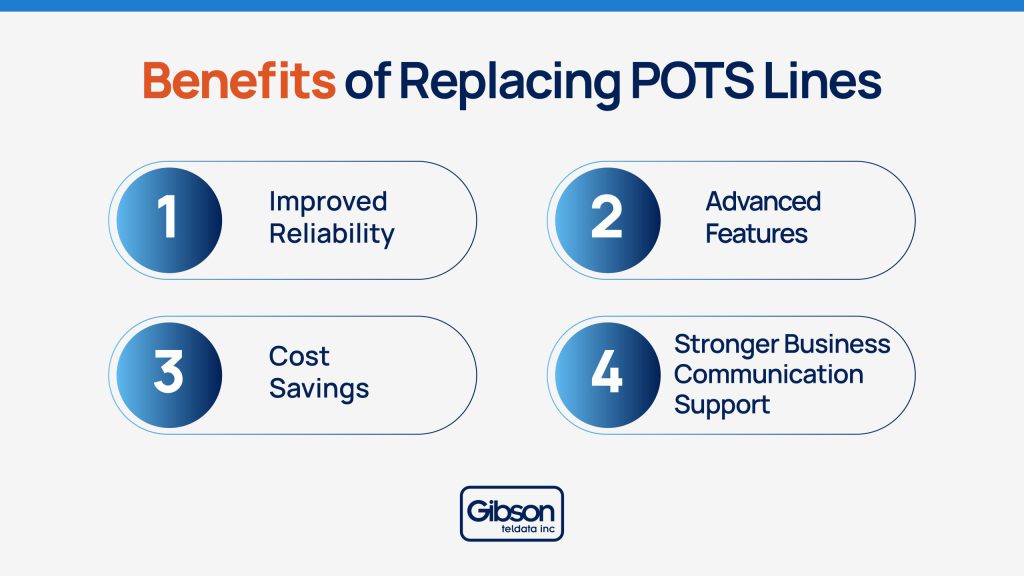
Transitioning away from analog lines provides immediate and long-term advantages.
| Improved ReliabilityModern systems are designed to support critical systems without relying on aging infrastructure. | Advanced FeaturesNew platforms offer advanced features like integration with customer relationship management (CRM), support for video calls, and improved scalability. |
| Cost SavingsSwitching to cost effective solutions reduces ongoing expenses tied to outdated telephone service. | Better Support for Business CommunicationsReplacing POTS lines enables more efficient business communications and supports modern workflows. |
How to Plan Your POTS Line Replacement Strategy
A structured approach ensures a smooth transition.
Step 1: Audit Your POTS Lines
Identify every phone line and system using POTS lines, including analog POTS lines and backup connections.
Step 2: Prioritize Safety Systems
Focus on safety systems like fire alarms, emergency phones, and elevator phones first.
Step 3: Evaluate POTS Line Replacement Options
Compare different POTS line replacement options based on reliability, redundancy, and compatibility.
Step 4: Plan for Professional Installation
Ensure professional installation is part of your rollout to avoid disruptions and ensure compliance.
Step 5: Execute a Seamless Transition
Work toward a seamless transition that minimizes downtime and protects operations.
Why Businesses Choose Gibson Teldata for POTS Replacement
Many businesses need guidance when navigating POTS replacement options.
Gibson Teldata helps simplify the process by delivering:
- Clear assessment of your current POTS lines and dependencies
- Tailored POTS line replacement strategies
- Reliable phone services designed for long-term performance
- Ongoing support after deployment
From initial planning to professional installation, Gibson Teldata focuses on making line replacement straightforward and effective.
Don’t Wait to Replace POTS Lines
The shift away from plain old telephone service is already happening. Businesses that act early gain more control over cost, timing, and implementation.
A proactive POTS line replacement plan helps you:
- Maintain compliance for fire alarms and security systems
- Avoid unexpected outages tied to failing copper wire infrastructure
- Support modern business communications
- Improve reliability across all phone systems
If you’re ready to explore your POTS line replacement options, start with Gibson Teldata’s enterprise phone system and build a strategy that supports your business today and into the future.
Final Thoughts on POTS Line Replacement

The retirement of traditional analog phone lines marks a major shift in how businesses manage communication infrastructure.
By investing in the right POTS replacement, organizations can protect essential services, modernize operations, and ensure long-term reliability.
Now is the time to evaluate your environment, identify risks, and take action before aging systems create unnecessary disruption. Contact us to get started!